 admin
Buying Greenland: The White House’s Arctic Gambit and the Cold Calculus of Sovereignty ❄️🛡️
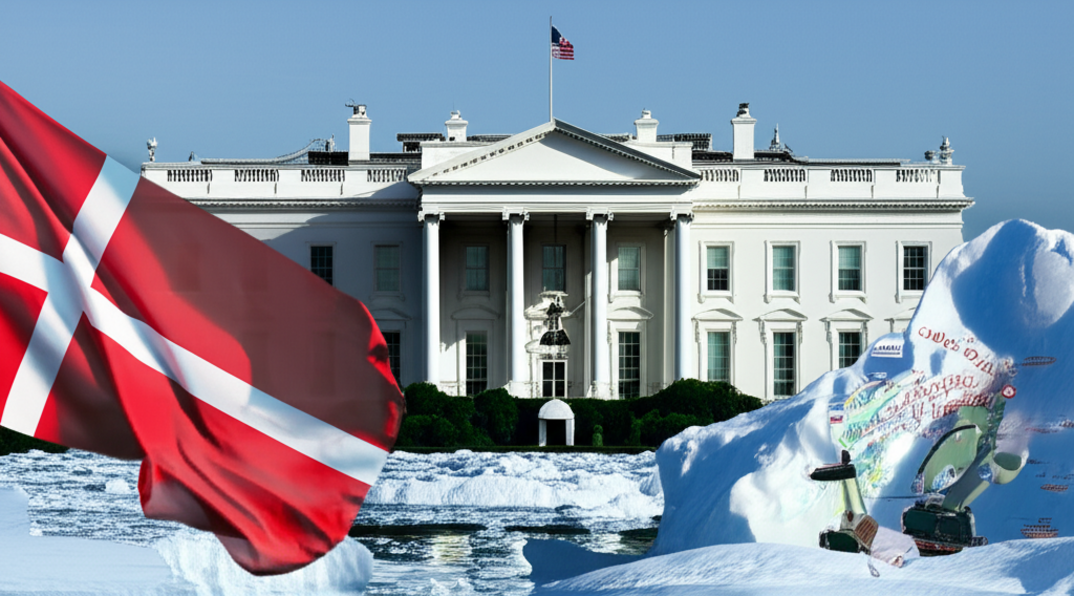
When the idea of purchasing a vast, icy landmass the size of Mexico resurfaces in the corridors of power, it inevitably raises an eyebrow or two. The suggestion that the United States might consider buying Greenland again—after Denmark’s curt rebuke during the last go-round—is a peculiar echo of a 19th-century world, reverberating oddly against the digital age’s backdrop. Is this an earnest geopolitical strategy or a surreal diplomatic farce? The White House’s recently disclosed discussions about “options” to acquire Greenland, including military uses, unfold a story as layered as the island’s sprawling glaciers.
The Greenland Gambit: History Meets Hypocrisy
Greenland has a long tradition of sparking international attention as if it were a rare collectible in the global marketplace. For centuries, potentates—and now presidents—have eyed it like a prize-winning polar bear in a trophy shop. The United States purchased Alaska from Russia in 1867, suggested by some historians to be the Alaska Purchase’s serene cousin in logic. Yet, decades later, men in suits reiterated the idea of buying Greenland as if it were a charming real estate deal rather than a sovereign island with 56,000 inhabitants and a government nestled under the Danish crown.
This scenario brims with a biting irony: in an era where national sovereignty is sacrosanct—at least rhetorically—the mere whisper of buying a piece of the world’s largest island raises questions of power, respect, and colonial legacy. The very nation most invested in championing democratic values considers Greenland’s sovereignty as a negotiable asset, almost like a secondhand car. Meanwhile, Greenlandic pride and self-determination simmer quietly beneath the glossy geopolitics.
It’s tempting to picture Greenland as a frosty patchwork quilt of ice and military bases. But imagine Greenland as a gargantuan iceberg drifting slowly across a chessboard where every move shades the looming shadow of climate change. A violent metaphor, maybe—but one that reveals the urgent reality beneath the frozen surface of political posturing.
Arctic Ice and Fire: Strategic Stakes Beyond the Surface
Far from a quaint possession for purchase, Greenland’s value lies in its strategic location, natural resources, and role as a barometer of climate change. It is the Arctic gatekeeper, a sentinel on the cold front where Russia’s ambitions meet America’s security interests, where melting glaciers expose new shipping lanes and untapped mineral wealth glitter beneath the ice like emeralds hidden in a geode.
The military dimension is no trivial footnote. The U.S. operates the Thule Air Base on Greenland’s northwest coast, a critical node in missile defense and early warning systems against potential threats from the Russian bear snoozing to the east. The White House’s unwillingness to rule out military uses in the acquisition talks hints at a cold war redux, where the Arctic is once again a frozen theater of strategic projection.
Striking Antithesis: The Land of Ice Against Modern Diplomacy
Here lies a paradox worthy of Tolstoy: Greenland — a vast, drifting ice-capped island — contrasts starkly with the polished, rarely frozen language of modern diplomacy. The assertion that America might buy Greenland read like a tweet in 2019 that whirled the media and politicians into a frenzy, only to be swiftly dismissed by Denmark as “absurd.” And yet, nearly half a decade later, these whispers remain alive, a reminder that some ideas, like lingering winter, refuse to melt quietly.
This antithesis—between 19th-century land grabs and 21st-century geopolitical nuance—invites us to reflect on the nature of power itself. Why does America look northward with an acquisitive gaze at a sovereign land? Because in the Arctic’s changing landscape, ice melts but ambitions do not. Greenland becomes a symbol, an evocative simile for resource-rich terrains worldwide that oscillate between sovereignty and strategic prize: like a dense iceberg, it is largely hidden beneath the surface, but what lurks underneath holds the key to future dominance.
Climate as the Invisible Player
Compounding the complexities is the undeniable reality of climate change. Greenland’s ice sheet is melting at unprecedented rates, contributing significantly to global sea-level rise. This transformation is not just environmental; it reshuffles the strategic deck. As ice retreats, Arctic shipping lanes open like new arteries of global trade, and resource extraction—once near impossible—becomes economically feasible.
Could this be why military considerations are never far from the discussion? A new Arctic order is emerging faster than treaties and ethics can keep pace. The White House’s talks about Greenland remind us that the geopolitical chessboard is already repositioning its pieces, long before climate policies catch up.
Who Owns Greenland’s Future?
The stark question remains: ownership of Greenland is not just about land but the future it entails. The Greenlandic people, predominantly Inuit, have steadily pushed for greater autonomy from Denmark, aiming for full independence. To them, the notion of being “sold” is a reductive, almost Orwellian simplification that ignores their agency and identity.
In the murk of diplomacy and strategy, we should not lose sight of the human dimension. Greenland’s future is intertwined with the indigenous communities’ quest to govern their lands and safeguard their culture amid the pressures of global superpowers and climate upheaval.
So, what are the options on the table exactly? Officially, the White House hedges its bets, keeping military deployments and diplomatic maneuvers in play as concurrent threads. Yet, the option to simply “buy” Greenland is more likely a strategic bluff in this Arctic poker game, a signal to allies and adversaries alike—more a shadow dance than a clear-cut proposal.
In this theater of icy paradoxes, Greenland is neither simply a frozen asset to acquire nor merely a geopolitical chess piece; it is a living emblem of a world caught between eras, struggling with sovereignty, survival, and strategy under the looming shadow of the melting Arctic.
Perhaps, then, the true question is not if Greenland can be bought, but how the shifting sands—or rather the melting ice—will redraw the maps of power in decades to come. 🌍❄️🏔️